
Most executives no longer need to be convinced that "AI matters."
What makes them hesitate is something else: after buying a batch of models, agents, and automation platforms, has the business actually changed?
In demos, AI can do everything. Inside a real company, permissions are incomplete, data is scattered, processes are full of exceptions, and business owners and engineers speak two different languages. In the end, an AI project easily turns into one long exercise in translation.
That's why more and more companies are looking for an FDE — a Forward Deployed Engineer. The role isn't just writing code on the customer's premises. It's entering the business itself and turning fuzzy problems into systems that can ship and be verified.
But this is also exactly where FDEs differ from one another.
The most expensive part of an AI project is real business context
For AI to take root inside a company, it first has to see how that company actually runs.
Requirements documents don't show it. Meeting notes don't show it. How sales really builds a quote, the full path of a support ticket being escalated, which exceptions eat the operations team's day — the real workflow lives in the small, concrete, unrecorded daily work of each role.
The traditional way to get at it is interviews, job-shadowing, and reading documentation: slow, distorted, and blind to precisely the exceptions that sink AI projects. Interviews give you the org-chart version of the business; halfway through the project you discover the real process is nothing like what was described.
In other words: the most expensive part of an AI project isn't writing code. It's obtaining real business context.
Why I built S-tello Trace
I didn't start S-tello Trace because I wanted another time tracker. I built it to solve my own biggest bottleneck as an FDE: when I enter a client company, how do I truly understand its business within weeks — instead of walking away with a stack of interview notes?
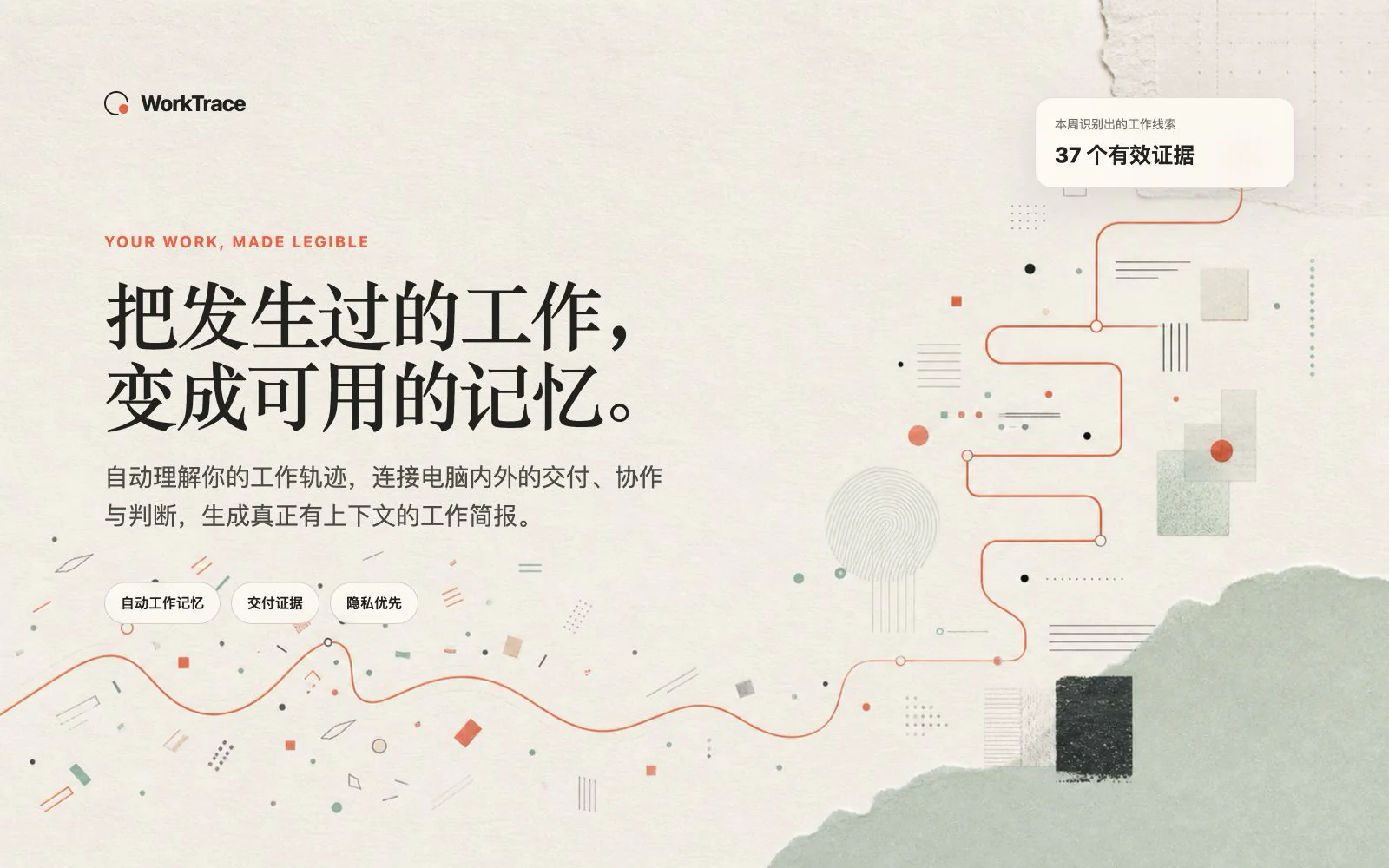
S-tello Trace is the capture layer I bring into the field. With the client's informed consent, it is deployed on key roles and connects each role's computer activity, communication, and delivery evidence around that role's responsibilities — forming a working memory that can be corrected and reused.
It doesn't replace the FDE's judgment. It replaces the dozens of hours of interviews that can never be finished and never quite get the right answer.
What's different about an FDE who arrives with S-tello Trace
The difference isn't "one more app installed." It's whether diagnosis and delivery stand on evidence.
1. Understand the role first, then decide what to capture
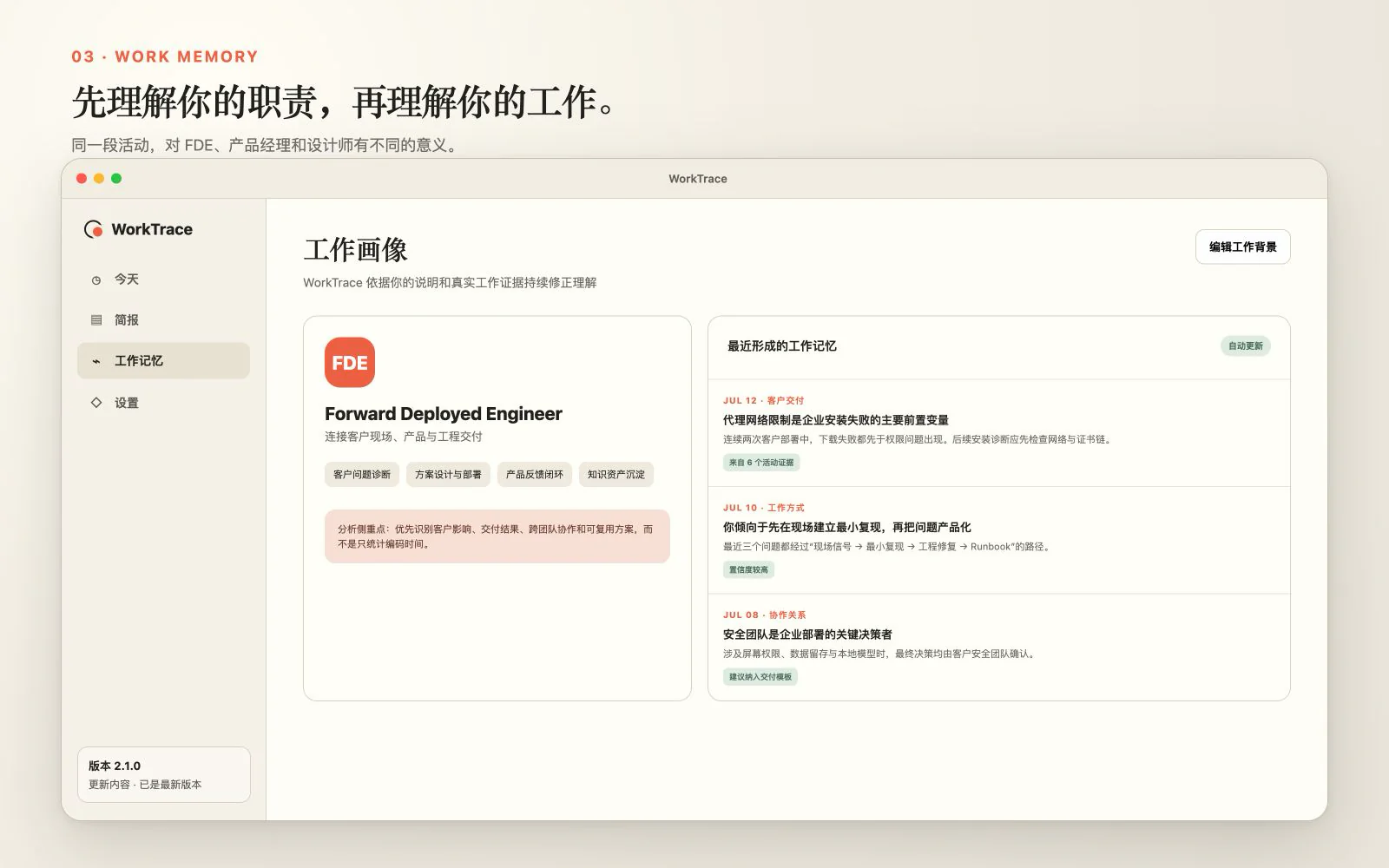
S-tello Trace starts by learning the responsibilities, typical deliverables, and collaborators of each role in the client company. The same hour of browser and meeting activity might mean coding for an engineer, assembling a quote for sales, or escalating a complaint for support.
Capture stops being a tally of tool usage and becomes a search for evidence around each role's business goals.
2. Real workflows, not the SOP on paper
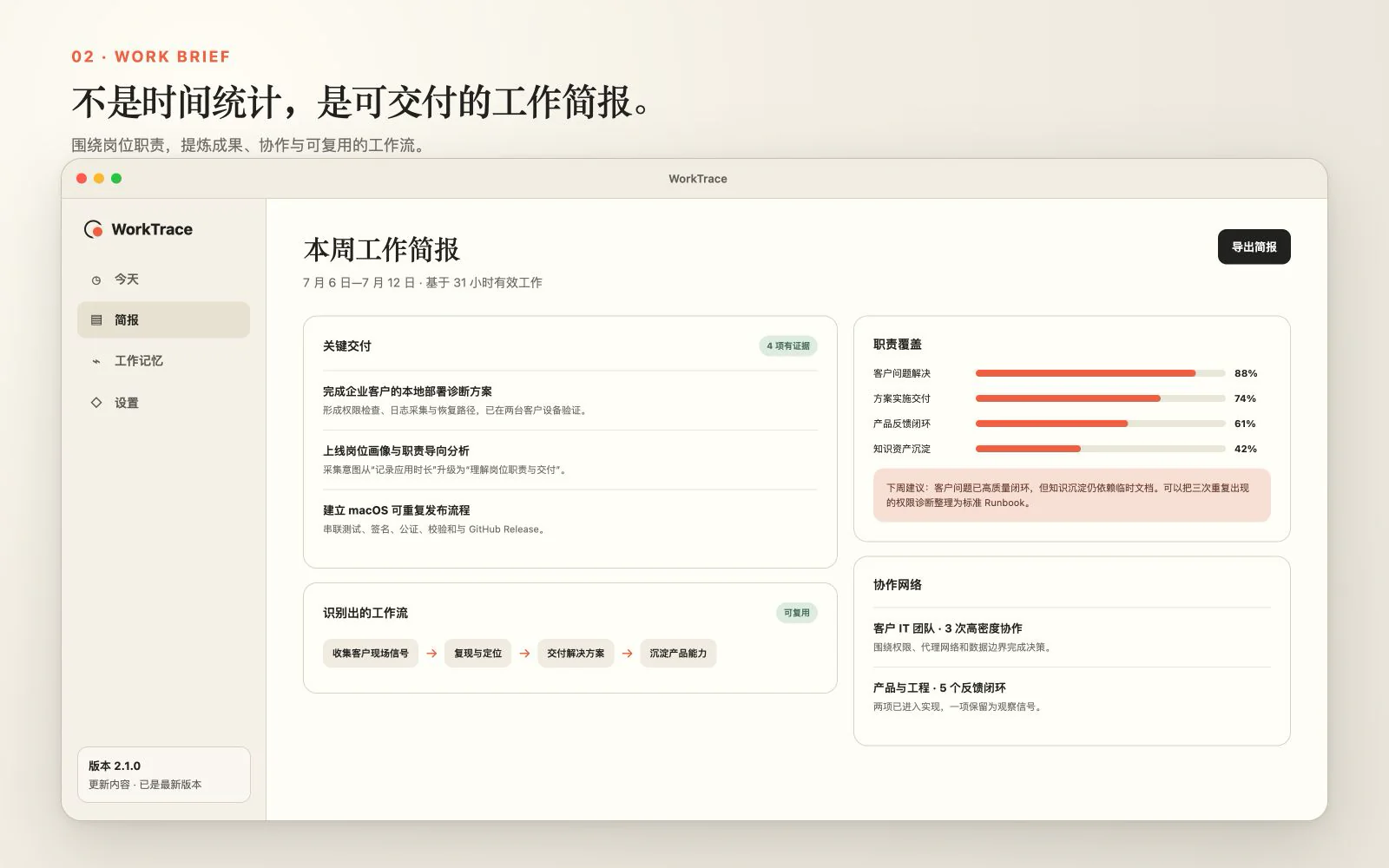
When a path like "lead comes in → check price history → get a manager's exception → amend the contract → file it" keeps recurring, S-tello Trace recognizes it as a workflow and keeps the evidence — including the exceptions that exist nowhere in the official process yet happen every day.
Which segment an AI solution should automate, and which it should route around, turns from a guess into a grounded judgment.
3. See cross-role collaboration and its breakpoints
AI projects rarely fail inside a single step; they fail at the handoffs. S-tello Trace builds a network around real collaborative activity: how work flows between roles, where it stalls, and who the unavoidable decision nodes are.
Those people and breakpoints usually surface only after the project is stuck — now they're visible before the solution is even designed.
4. Delivery that can be verified, not just reported
The captured baseline doubles as the yardstick. After the AI system goes live, you compare against the same workflow: which steps got shorter, which handoffs disappeared. What the boss sees isn't "it launched" — it's what changed.
What bosses actually buy isn't an FDE's busyness
When a boss hires an FDE, they're actually buying three things:
- someone who can enter the business and find the real constraints of the problem;
- someone who can translate those constraints into a system that ships;
- every delivery compounds, making the next one faster and steadier.
On interviews and verbal updates alone, the first two might barely happen. The third rarely does.
The role profiles, workflows, and collaboration networks that S-tello Trace captures belong to your company. When the project ends, that business understanding doesn't leave with the FDE — the next AI initiative starts from a business that has already been seen.
This is not an employee-monitoring tool
If capture is going into a client company, the boundary has to be stated up front.
S-tello Trace keeps data on the local machine by default. Capture can be paused, sensitive apps can be excluded, and the system's conclusions can be corrected by the person being captured. The responsibility-coverage chart shows how activity was actually distributed, not who performed better; the collaboration network shows evidence of work, not a rating of relationships. It serves business diagnosis and delivery — it does not manufacture a context-free performance score for managers.
This is more than compliance. Only when employees trust the capture and are willing to let their real work be seen is the data true — and high-quality FDE work runs on exactly that trust.
If you're pushing AI forward
If you're serious about putting AI into your business processes, or you're evaluating an FDE, start with three questions:
- How do they understand your business — by restating interviews, or with evidence?
- Which real workflow does the solution land on, and how will it be verified after launch?
- After the project ends, how much business understanding stays in your organization?
S-tello Trace is my answer to those three questions.
I want AI to grow on the real business instead of being bolted onto the company — and I want every delivery to leave the next one a better starting point.
S-tello Trace — your work, made legible.
Next: want to try S-tello Trace? Add me on WeChat and talk to me directly — and feel free to bring a real AI problem from your business.